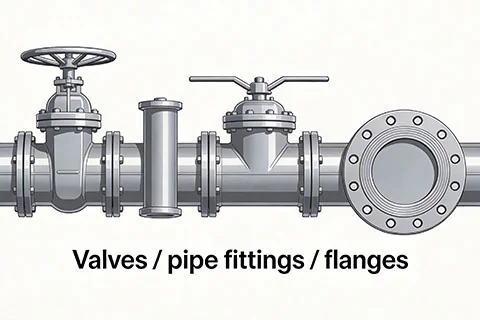
Strength
Strength rarely decides this comparison, because they overlap. Ductile iron tensile strength runs roughly 60,000–120,000 psi across ASTM A536 grades, and its yield strength (about 40 ksi in common grades) actually exceeds typical cast carbon steel (about 36 ksi). Steel's advantage is not raw strength but toughness — see impact below.
Cost
Ductile iron wins clearly on cost. It melts and pours at lower temperatures with simpler molds and fewer defect-related reworks, so ductile iron castings are commonly 30–50% cheaper than comparable steel castings. Steel's higher casting temperature, larger risers, and greater energy use all raise its cost.
Weight & Strength-to-Weight
Ductile iron is slightly less dense than steel, giving a favorable strength-to-weight ratio. Redesigning a steel part as a single ductile iron casting often cuts weight and machined stock substantially — one documented case reduced mass by about 41% and machined stock by 60% versus the original steel design, while consolidating multiple components into one casting.
(See our ductile iron grades guide for the strength options behind these redesigns.)
Machinability
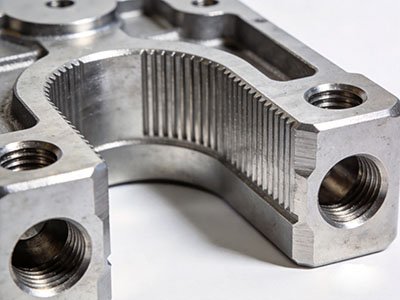
Ductile iron is significantly more machinable than steel. Its graphite acts as a chip breaker and tool lubricant, so cutting speeds are higher and carbide tools last roughly 2–3× longer, cutting machining cost by an estimated 20–40%. For parts needing extensive machining, this is a major total-cost advantage for ductile iron.
Castability
Ductile iron casts more easily. Its lower melting point and far smaller solidification shrinkage mean smaller risers, higher yield, and fewer defects. Cast steel shrinks more as it solidifies, requiring larger risers (extra molten-metal reservoirs) plus the energy to melt and hold them — all of which add cost and complexity.
| Factor | Ductile Iron | Cast Steel |
|---|---|---|
| Cost | Lower (30–50% cheaper) | Higher |
| Yield strength | Higher (~40 ksi) | ~36 ksi (carbon) |
| Machinability | Better | Lower |
| Castability | Better (less shrinkage) | More shrinkage, bigger risers |
| Weldability | Limited (special procedure) | Good |
| Impact toughness | Lower | Much higher |
Weldability & Impact Toughness
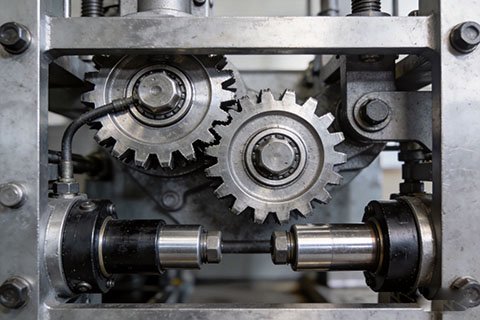
This is where steel pulls ahead. Cast steel welds readily, while ductile iron requires specialized weld procedures and is not suited to routine structural welding. Steel also has far higher impact toughness — Charpy values can be several times to dozens of times higher than ductile iron at normal temperatures — making it the safer choice for shock loading and low-temperature service.
When to Choose Each
The decision usually comes down to assembly method, operating temperature, and cost. Choose ductile iron when cost, machinability, weight, and castability matter and the part is bolted rather than welded — valve and pump bodies, housings, brackets, and gears. Choose cast steel when the part must be structurally welded, must survive high impact or low temperatures, or needs maximum ductility. For the lighter-duty alternative, compare with gray iron vs ductile iron.
FAQ
Is ductile iron stronger than steel?
Their tensile strength overlaps, and ductile iron's yield strength (about 40 ksi in common grades) often exceeds typical cast carbon steel (about 36 ksi). Steel's real advantage is impact toughness, not raw strength.
Is ductile iron cheaper than cast steel?
Yes. Ductile iron castings are typically 30-50% cheaper because they melt and pour at lower temperatures, use simpler molds and smaller risers, and have fewer defect-related reworks.
Which is more machinable, ductile iron or steel?
Ductile iron. Its graphite breaks chips and lubricates the tool, giving higher cutting speeds and 2-3x longer carbide tool life, which lowers machining cost by an estimated 20-40% versus steel.
When should I choose cast steel over ductile iron?
Choose cast steel when the part must be structurally welded, must withstand high impact or low temperatures, or needs maximum ductility. Steel welds readily and has far higher impact toughness than ductile iron.
Can ductile iron be welded like steel?
Not routinely. Ductile iron can be welded only with specialized procedures (preheat, specific fillers, controlled cooling) and is generally treated as a repair operation. If a casting needs structural welding, cast steel is the better choice.