Why Valve Body Material Matters
The body is the pressure-containing shell of a valve, so its material sets the valve's pressure rating, temperature limit, corrosion life, and a large share of its cost. Choosing the wrong body material leads to leakage, premature corrosion, or paying for stainless where ductile iron would have served. Because most industrial valve bodies are castings, material choice is also a manufacturability decision: the casting process, wall thickness, and machinability all follow from the alloy.
Four Selection Factors
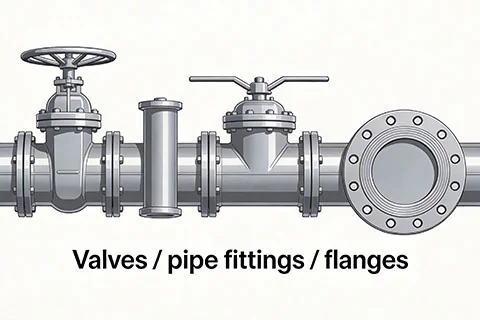
Four variables drive valve body material selection. Pressure sets the minimum strength and wall thickness. Temperature rules out materials that lose strength or embrittle — gray iron, for example, is limited in steam service. Corrosion and the medium (water, gas, oil, chemicals, potable supply) determine whether iron, bronze, or stainless is appropriate. Cost and weight break ties: iron bodies are far cheaper than stainless and acceptable for most water and gas duties.
Valve Body Material Chart
| Material | Typical pressure / temp | Corrosion resistance | Relative cost | Typical valve service |
|---|---|---|---|---|
| Gray iron (ASTM A126) | Low pressure; up to ~200 °C | Low–moderate | Lowest | Water, HVAC, low-pressure gas |
| Ductile iron (ASTM A536 / A395) | Medium–high pressure; up to ~350 °C | Moderate | Low | Water, gas, pipeline, fire protection |
| Bronze (ASTM B62) | Low–medium pressure | Good (water/marine) | Medium | Small potable-water, marine valves |
| Carbon steel (ASTM A216 WCB) | High pressure; up to ~425 °C | Low (needs coating) | Medium–high | Oil & gas, steam, power |
| Stainless steel (ASTM A351 CF8M) | High pressure; cryogenic to high temp | Excellent | Highest | Corrosive, hygienic, chemical media |
Pressure and temperature limits depend on valve class, wall thickness, and applicable code; confirm against the valve standard and medium before specifying.
Cast Iron & Ductile Iron Bodies
Gray iron (ASTM A126) is the economical choice for low-pressure water, HVAC, and building services where its lower strength and brittleness are acceptable. Ductile iron (ASTM A536, and ASTM A395 for pressure-retaining service) is the workhorse for waterworks, gas distribution, fire protection, and pipeline valves: its nodular graphite gives the impact toughness and higher pressure capability that gray iron lacks, at a fraction of the cost of steel. See gray iron vs ductile iron for the underlying material differences.
Steel & Bronze Bodies
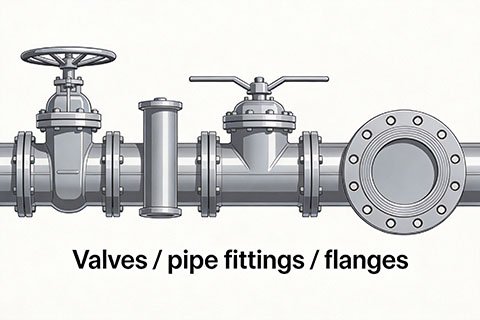
Carbon steel (ASTM A216 WCB) bodies handle the high pressures and temperatures of oil, gas, steam, and power service where iron is not rated, but need coating or lining against corrosion. Stainless steel (e.g. CF8M / 316) is specified for corrosive chemicals, seawater, and hygienic or food-grade media, accepting the highest cost for the best corrosion resistance. Bronze remains common for small potable-water and marine valves thanks to its corrosion resistance and machinability. For an iron-vs-steel strength comparison, see ductile iron vs steel.
How to Choose by Application
Start from the medium and its pressure/temperature, then select the lowest-cost material that satisfies all four factors. Municipal water and HVAC: gray or ductile iron. High-pressure water, gas, fire mains, pipelines: ductile iron. High-pressure oil, gas, steam: carbon steel. Corrosive, marine, or hygienic media: stainless or bronze. For pump and valve castings specifically, see pump & valve iron castings and our pipe & valve components.
FAQ
What material is best for a valve body?
There is no single best material — match it to service. Gray iron suits low-pressure water and HVAC, ductile iron handles higher-pressure water and pipelines, carbon steel covers high-pressure oil and steam, and stainless steel is for corrosive or hygienic media. Choose the lowest-cost option that meets pressure, temperature, and corrosion needs.
Is cast iron or steel better for valve bodies?
It depends on duty. Cast and ductile iron bodies are cheaper and well suited to water, gas, and pipeline service at moderate pressure. Carbon and stainless steel bodies are needed for high-pressure, high-temperature, or corrosive media where iron is not rated.
What is the difference between gray iron and ductile iron valves?
Gray iron (ASTM A126) is economical but brittle and limited to low pressure. Ductile iron (ASTM A536/A395) has nodular graphite that gives impact toughness and higher pressure capability, making it the standard for waterworks, gas, fire protection, and pipeline valves.
When should I specify a stainless steel valve body?
Specify stainless steel when the medium is corrosive (chemicals, seawater) or hygienic (food, pharma), or when both high pressure and corrosion resistance are required. It offers the best corrosion resistance and temperature range but at the highest cost.
What pressure and temperature can ductile iron valve bodies handle?
Ductile iron valve bodies typically serve medium-to-high pressure water, gas, and pipeline duties up to roughly 350 °C, with the exact rating set by valve class, wall thickness, and code. ASTM A395 ductile iron is used for pressure-retaining service.