What Is a Machining Tolerance?
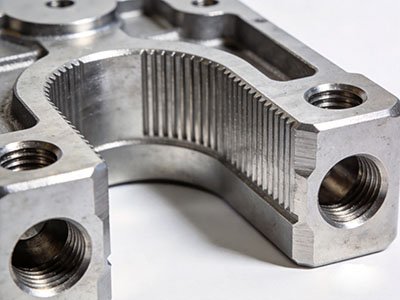
A tolerance is the allowable deviation from a nominal dimension — for example, a 50 mm bore specified as 50 mm ±0.05 mm may measure anywhere from 49.95 to 50.05 mm and still pass. On cast iron components, two sets of tolerances apply: the looser as-cast tolerances on surfaces left in the cast condition, and the much tighter machining tolerances on features cut by CNC turning, milling, drilling, or grinding. Tighter tolerances require more setups, slower cuts, and more inspection, so they raise cost — the goal is to tolerance each feature to its actual function.
As-Cast (ISO 8062) vs Machined (ISO 2768)
Surfaces left as-cast are governed by casting-tolerance standards such as ISO 8062 (and the older CT grade system), which scale tolerance with feature size and casting process — sand-cast iron typically falls around CT11–CT13. Machined features instead follow general machining tolerances such as ISO 2768, with classes fine (f), medium (m), and coarse (c). Most machined cast iron parts are quoted to ISO 2768-m by default, with explicit tighter callouts on bores, mating faces, and bearing seats.
Tolerance Chart for Machined Cast Iron
| Class | Typical tolerance (in) | Typical tolerance (mm) | Where it applies |
|---|---|---|---|
| As-cast (ISO 8062, ~CT12) | ±0.02–0.06 | ±0.5–1.5 | Unmachined cast surfaces |
| General machined (ISO 2768-c, coarse) | ±0.012 | ±0.3 | Non-critical machined features |
| Standard machined (ISO 2768-m, medium) | ±0.005 | ±0.13 | Most machined features (default) |
| Fine machined (ISO 2768-f) | ±0.002 | ±0.05 | Mating faces, locating features |
| Precision / tight | ±0.001 or tighter | ±0.025 or tighter | Bores, bearing seats, seal grooves |
Values are practical ranges for machined cast iron and depend on feature size, geometry, and inspection method; always confirm against the applicable ISO/ASME class on the drawing.
What Counts as a "Tight" Tolerance?
For everyday CNC work, ±0.005 in (±0.13 mm) is a comfortable standard tolerance, not a tight one. A tolerance of ±0.001 in (±0.025 mm) is genuinely tight — it usually demands a dedicated finishing pass, temperature control, and possibly grinding or honing. 0.05 mm (±0.05 mm, ISO 2768-f range) is a good, readily achievable precision tolerance for most machined cast iron features. The right answer depends on the feature: a clearance hole tolerates ±0.25 mm; a bearing bore may need ±0.013 mm.
Surface Finish on Machined Cast Iron
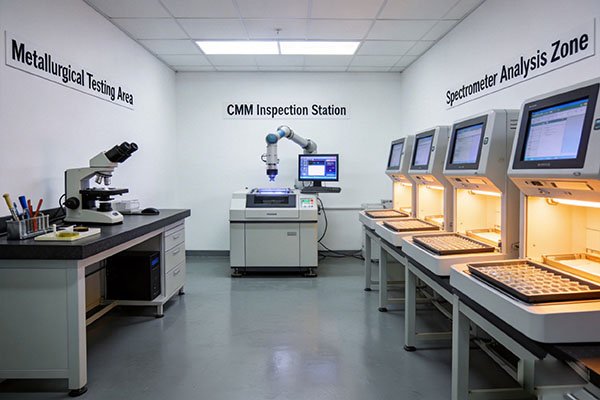
Surface finish (roughness, Ra) is specified separately from dimensional tolerance. As-machined cast iron faces typically reach Ra 1.6–3.2 µm by milling or turning; finer finishes of Ra 0.4–0.8 µm require grinding or honing and are reserved for sealing surfaces and bearing seats. Cast iron's graphite microstructure machines well and holds a stable finish, but tighter Ra targets add operations and cost, so specify them only where sealing or wear demands it.
Specifying Tolerances Cost-Effectively
Apply a general tolerance block (e.g. ISO 2768-m) to the drawing, then add explicit tight callouts only on the few functional features that need them — mating faces, bores, and bearing seats. Leaving non-critical surfaces as-cast or at coarse tolerance avoids unnecessary machining. Early design-for-machining review with your foundry, plus consistent datums, keeps machined cast iron parts both accurate and affordable. For material behavior, see gray iron vs ductile iron.
FAQ
What is the standard tolerance for CNC machining cast iron?
The common default is about ±0.005 in (±0.13 mm), equivalent to ISO 2768 medium class. It applies to most machined features on cast iron parts; bores, bearing seats, and sealing faces are usually given tighter explicit callouts.
Is a .005 inch tolerance tight?
No. On CNC machined cast iron, ±0.005 in (±0.13 mm) is a standard, easily achievable tolerance, not a tight one. It is the typical default for general machined features and does not usually need a dedicated finishing pass.
Is a .001 inch tolerance tight?
Yes. ±0.001 in (±0.025 mm) is a genuinely tight tolerance. Achieving it on cast iron typically requires a finishing pass, temperature control, and sometimes grinding or honing, which increases cost and inspection.
Is 0.05 mm a good tolerance?
Yes. ±0.05 mm (ISO 2768 fine range) is a good, readily achievable precision tolerance for machined cast iron features such as mating faces and locating surfaces, without the cost of sub-0.025 mm precision work.
What tolerance can be held on as-cast iron surfaces?
Unmachined surfaces follow casting tolerances per ISO 8062, typically around CT11–CT13 for sand-cast iron — roughly ±0.5–1.5 mm depending on size. Features needing closer control must be machined rather than left as-cast.