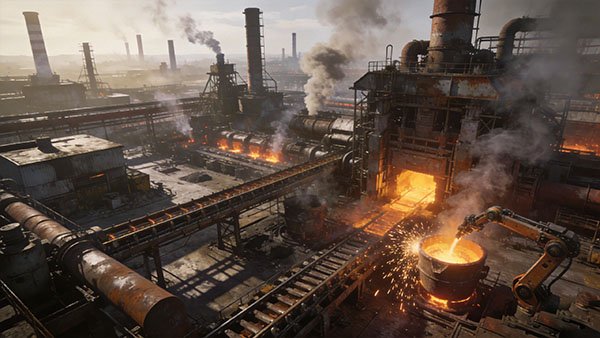
Why Choosing the Right Foundry Matters
The foundry you select controls casting integrity, dimensional consistency, lead time, and total landed cost. Switching suppliers after tooling is built is expensive and slow, so the decision is effectively long-term. A disciplined evaluation up front — rather than choosing on price alone — is the single best protection against rejects, delays, and quality disputes.
1. Verify Certifications & Quality Systems
Start with the quality management system. A credible iron foundry should hold ISO 9001, and for automotive work IATF 16949. These confirm documented process control, traceability, and corrective-action discipline. Ask for current certificates and check the scope and validity dates. Relevant casting standards — such as ASTM A48 for gray iron and ASTM A536 for ductile iron — should be ones the foundry routinely certifies to.
2. Confirm Casting Capability
Match the foundry's real capability to your part. Confirm the materials they pour (gray iron grades, ductile iron grades, alloyed irons), the size and weight range they handle, the molding processes available (green sand, resin/no-bake, and whether they also offer investment casting for precision parts), and their machining and finishing services. A foundry that routinely produces parts like yours — in material, size and complexity — is far lower risk than one stretching outside its norm.
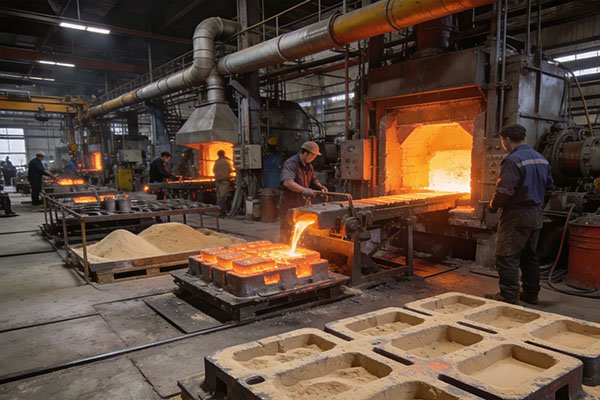
3. Evaluate Quality Control & Testing
Reliable castings come from measured processes, not promises. Look for in-house spectrometer chemistry analysis on every heat, mechanical testing (tensile and Brinell hardness on cast test bars), and non-destructive testing — visual, dimensional, and where required radiographic, ultrasonic, or magnetic-particle inspection. Ask how they handle casting defects, what their reject rate is, and whether they provide material and inspection certificates with each lot.
4. Request Samples & References
Documentation tells you what should happen; samples and references tell you what does. Request sample castings or a first-article from a representative part and inspect dimensions, surface finish, and soundness yourself. Ask for customer references in your industry and, ideally, a virtual or on-site factory audit. A foundry confident in its work will welcome the scrutiny.
5. Assess Communication, Lead Time & Logistics
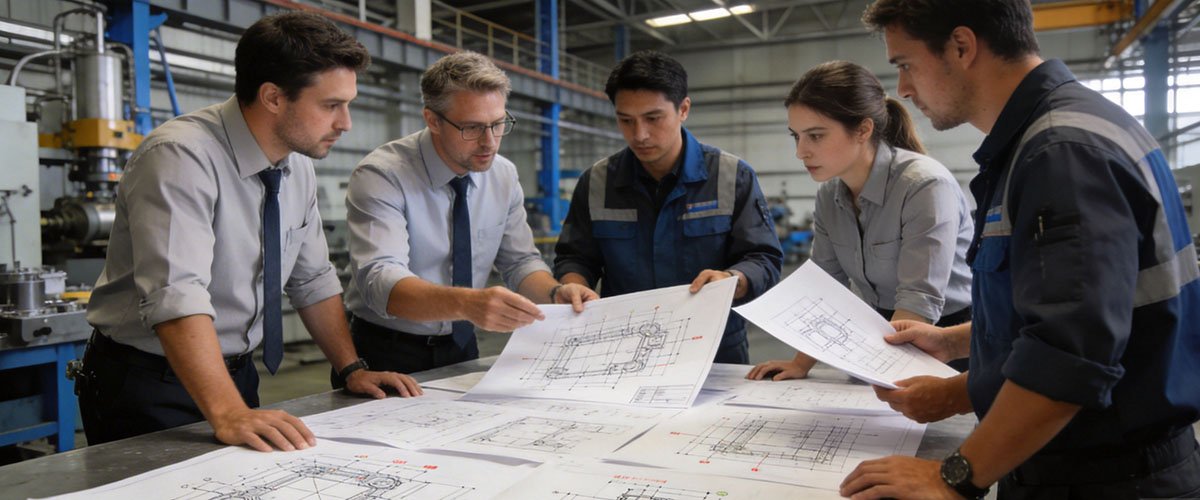
For overseas sourcing especially, responsiveness and clarity predict how problems will be handled. Gauge how quickly and precisely they answer technical questions, whether an English-speaking engineer reviews your drawings, and how they quote lead time and handle revisions. Confirm packaging, export documentation, and logistics experience. Reliable communication during quoting is the best preview of communication during production.
Red Flags to Avoid
- No verifiable ISO 9001 (or IATF 16949 for automotive) certificate.
- Vague answers on chemistry, mechanical testing, or reject rates.
- Unwillingness to provide samples, references, or an audit.
- A quote far below the market with no explanation — often a sign of corners being cut.
- Slow, unclear, or evasive communication during quoting.
The Foundry Selection Checklist
| Area | What to confirm |
|---|---|
| Certifications | ISO 9001; IATF 16949 (automotive); relevant ASTM/ISO casting standards |
| Capability | Materials, size/weight range, molding processes, machining |
| Quality control | Spectrometer, mechanical & NDT testing, certificates per lot |
| Proof | Sample castings, customer references, factory audit |
| Communication | Technical responsiveness, lead time, export/logistics |
Score candidates across these areas rather than on price alone, and shortlist the foundry that best fits your part's material, tolerance, volume, and quality requirements.
FAQ
What certifications should a reliable iron foundry have?
At minimum ISO 9001 for quality management, and IATF 16949 for automotive castings. The foundry should also routinely certify to the relevant casting standards, such as ASTM A48 for gray iron and ASTM A536 for ductile iron.
How do I verify an overseas iron foundry's quality?
Request current certificates, sample or first-article castings to inspect yourself, customer references in your industry, and a virtual or on-site factory audit. Confirm they provide material chemistry and inspection certificates with each lot.
Is the cheapest foundry quote a good idea?
Usually not. A quote far below the market often means corners are cut on material, testing, or process control, which surfaces as rejects and delays later. Evaluate total landed cost and quality capability, not just unit price.
What quality testing should an iron foundry perform?
Spectrometer chemistry analysis on each heat, mechanical testing (tensile and Brinell hardness on cast test bars), and non-destructive testing such as visual, dimensional, radiographic, ultrasonic, or magnetic-particle inspection as the part requires.
Why does communication matter when choosing a foundry?
Responsive, clear communication during quoting predicts how the foundry will handle problems in production. For overseas sourcing, an English-speaking engineer reviewing your drawings and clear lead-time commitments greatly reduce risk.