Casting Processes
From molten metal to finished components — precision casting methods trusted by global industries.
Get a Quote →What Is the Casting Process?
A step-by-step journey from design to solid metal component
The casting process begins with pattern making, followed by mold preparation, melting and pouring, solidification, shakeout, and finishing. Each stage is meticulously controlled to ensure metallurgical integrity and dimensional accuracy.
Green Sand Casting
Our primary casting method for gray iron and ductile iron components. Green sand casting offers excellent dimensional stability, low tooling cost, and flexibility for both small and large batch production.
- Mold preparation: silica sand + clay + moisture
- Melting: induction furnace precise chemistry control
- Pouring: automated or manual with temperature monitoring
- Shakeout & cleaning: shot blasting, grinding
Other Casting Methods
Selecting the right process for your application
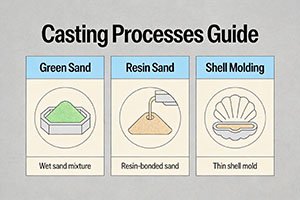
Low to medium volume, large parts, low tooling cost
High precision, complex shapes, higher cost
High volume, non-ferrous metals, excellent surface finish
Matson Iron Casting specializes in sand casting for iron alloys, but we can also support other processes through our partner network.
Why Our Process Delivers Superior Castings
- In-house metallurgical lab and CMM inspection
- Real-time process monitoring (temperature, chemistry)
- Full traceability from melt to final machining
- ISO 9001:2015 certified quality system
Every casting undergoes dimensional, mechanical, and visual inspection. We provide full documentation including material certificates and dimensional reports.
Our Quality Commitment →Ready to Start Your Casting Project?
Send us your drawings and get a quotation within 24 hours.